Lost and Found, Then Lost Again: The Skate Pileup Problem Nobody at Your Rink Wants to Talk About

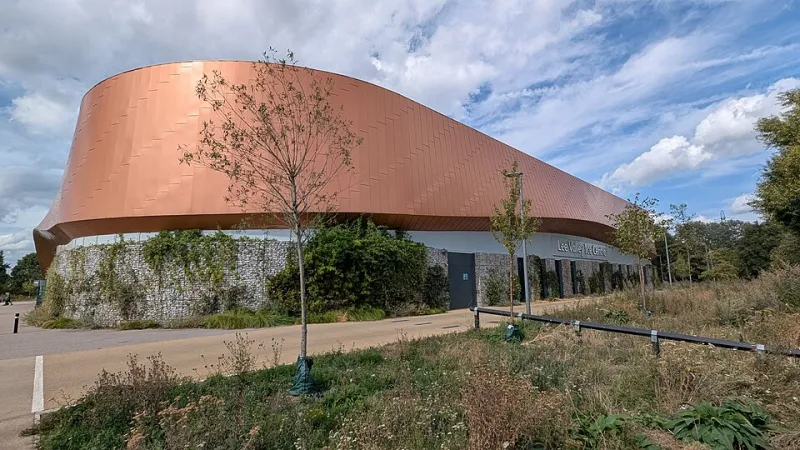
Photo: Julian P Guffogg, CC BY-SA 2.0, via Wikimedia Commons
Somewhere in a storage room behind the front desk of your local rink, there's probably a bin. Maybe it's a plastic tote. Maybe it's an entire rolling rack. And it is absolutely stuffed with skates that nobody came back for.
We're not talking about a pair here and there. Rink managers across the country describe collections that balloon into the dozens — sometimes the hundreds — over the course of a single season. Helmets with cracked straps. Figure skates in sizes 3 through 11. Hockey skates still laced up, like whoever wore them just stepped out of them mid-stride and never returned. It's a phenomenon so common that staff barely blink at it anymore. But the scale of the problem, once you start adding it up nationally, is genuinely staggering.
How Does This Even Happen?
The short answer: skating is chaotic, and people are forgetful. A family comes in for a Saturday public skate, the kids are exhausted and melting down by the time they get their rental skates off, and the personal pair they brought gets kicked under a bench and forgotten entirely. Or a kid outgrows their skates mid-season, the parents buy a new pair, and the old ones just... never make it back into the car.
Hockey players are notorious contributors, too. After a late-night game, when adrenaline is still running high and everyone's heading out for a post-game meal, it's remarkably easy to leave a bag behind. And unlike a phone or a wallet, a pair of skates doesn't exactly buzz or light up when you forget it.
Rink staff will tell you that the lost-and-found situation gets particularly bad around the holidays — prime time for public skate sessions full of first-timers — and again at the end of spring seasons, when hockey leagues wrap up and people mentally check out before physically clearing out their gear.
The Storage Nightmare Nobody Budgeted For
Here's the thing: rinks aren't exactly flush with extra square footage. Ice facilities are built around, well, the ice. Every square foot of storage space is precious, and dedicating a growing chunk of it to unclaimed equipment creates real operational friction.
Staff have to sort through it, log it, hold it for a reasonable claim period, and then figure out what to do with it when nobody shows up. Most rinks have informal policies — hold items for 30 to 90 days, then donate or discard. But "informal" is doing a lot of work in that sentence. In practice, the gear just tends to accumulate because nobody has time to process it systematically.
Smaller community rinks, which often run on skeleton crews, are hit hardest. There's no dedicated lost-and-found coordinator. The person handling unclaimed skates is the same person resurfacing the ice, scheduling lessons, and answering the phone. Something's always going to fall through the cracks, and usually it's the pile of abandoned gear in the corner.
What Actually Happens to Unclaimed Skates?
The fate of abandoned skating equipment varies wildly depending on the facility. Some rinks donate to local nonprofits or youth programs — a genuinely good outcome that puts usable gear back in the hands of kids who need it. Organizations that support underserved communities often welcome skate donations, since equipment cost is one of the biggest barriers keeping lower-income families out of ice sports.
Other facilities have gotten creative with resale. A handful of rinks have set up informal swap shops or gear consignment setups right in their lobbies, selling unclaimed skates at steep discounts. It's a win-win: the rink clears out storage space and generates a little revenue, and families who can't afford new equipment get access to decent gear at a fraction of the cost. Some rinks have even partnered with local thrift stores or sporting goods resellers to offload inventory in bulk.
But plenty of perfectly functional skates end up in the trash. Blades that could be sharpened and used for years get tossed because the rink ran out of room, ran out of time, or simply didn't have a better option. It's a quiet waste stream that rarely gets attention, but it represents real dollars and real environmental impact.
The Accessibility Angle Nobody's Connecting
Here's what's worth sitting with for a second: ice skating equipment is expensive. A decent pair of entry-level figure skates runs $80 to $150 new. Hockey skates for kids can easily hit $200 or more. For families already stretching their budgets, that price tag is the wall between their kid skating and not skating.
And yet rinks are quietly sitting on mountains of usable gear that they don't have the infrastructure to redistribute efficiently. The supply exists. The demand exists. The gap in between is purely logistical — and it's a gap that the ice sports community has been slow to close.
A few rinks have started to crack this open in meaningful ways. Some have launched annual "skate drives" timed to the start of the season, collecting donated equipment and distributing it through youth leagues or learn-to-skate programs. Others have built partnerships with schools or rec centers to funnel gear toward kids who wouldn't otherwise have access. These programs work. They just need more rinks to actually build them.
What Better Looks Like
The rinks that are handling this well tend to have a few things in common. First, they've made the lost-and-found process visible — posting clear signage about hold periods and what happens to unclaimed items, so skaters know the clock is ticking. Second, they've built relationships with donation partners before the pile gets out of control, so there's always somewhere for gear to go. Third, they've turned the resale or giveaway angle into a community touchpoint rather than a back-room afterthought.
One model worth watching: rinks that hold seasonal "gear swaps" as public events. Families bring in skates their kids have outgrown, trade or sell them to other families, and the rink facilitates the whole thing. It drives foot traffic, builds community goodwill, and solves the equipment affordability problem at the grassroots level. It's not complicated. It just requires someone deciding it's worth doing.
The Bigger Picture
Abandoned skates are a small problem that points toward a big one. Ice sports in America have a cost problem, an access problem, and an infrastructure problem — and all three show up in that storage room full of gear nobody claimed. The equipment is there. The need is there. What's missing is the connective tissue between them.
For rinks looking to deepen their community roots, this is actually a low-hanging opportunity. A well-run gear exchange or donation program costs relatively little to set up and signals something important to the families in your community: this rink is for everyone, not just the ones who can afford to show up fully equipped.
Next time you're at your local facility, peek behind the front desk. If there's a bin overflowing with forgotten skates, that's not just clutter. That's an unmet need wearing a size 6 figure skate, waiting for someone to do something useful with it.