Beyond the Blades: How America's Rinks Are Reinventing Themselves as Year-Round Community Hangouts
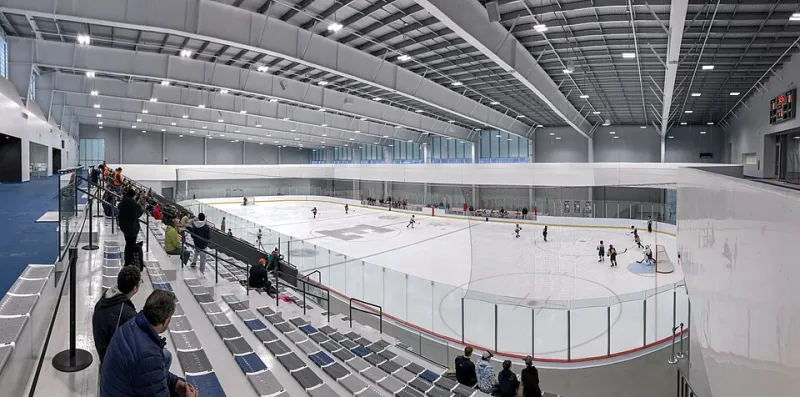
Photo: Ryan Dickey from Evanston, IL / Chicago, United States, CC BY 2.0, via Wikimedia Commons
Walk into a rink on a random Tuesday evening these days, and you might be surprised by what you find. Sure, there's probably someone grinding out figure eights in the corner, and maybe a youth hockey practice wrapping up on the far end. But over in the lobby? A group of neighbors is watching a live NHL playoff game on a big screen, sharing nachos and debating line changes like they've been doing it for years. The snack bar smells like fresh popcorn instead of week-old hot dogs. Someone's stringing up lights for a trivia night that starts at eight.
This isn't a fluke. It's a movement — and it's quietly reshaping what it means to be a local ice facility in America.
The Old Model Was Running on Thin Ice
For decades, the traditional rink business model was pretty straightforward: sell ice time, rent skates, run some lessons, maybe host a birthday party or two. Revenue was seasonal, margins were tight, and the off-hours were dead. A lot of facilities — especially smaller community rinks — limped through slow stretches by cutting costs wherever they could.
But that approach has a ceiling, and a lot of rink operators hit it hard. Energy costs kept climbing. Staffing got complicated. And with so many entertainment options competing for people's free time, a basic public skate session stopped being the automatic weekend draw it once was.
Something had to change. And for the facilities that figured it out early, the shift has been nothing short of remarkable.
Watch Parties That Actually Pack the House
One of the easiest wins rinks have found is leaning into hockey's massive and passionate fan base — even when those fans aren't strapping on skates themselves. Ice facilities in cities like Pittsburgh, Minneapolis, and Boston have been hosting NHL watch parties for several years now, and the formula works surprisingly well. You've already got the space. You've already got the screens (or the budget to rent them). And if your city has a team with a playoff run going, you've got a built-in audience that's hungry for somewhere to gather.
The genius of this approach is that it brings in people who might never have thought of a rink as their spot. But once they're in the building, they see the ice, they see the energy, and a decent chunk of them come back for a public skate the following weekend. It's low-cost marketing disguised as a community event.
Smaller rinks without a local NHL team nearby have found success with college hockey watch parties, AHL games, and even big international tournaments. The sport is the hook; the rink is the destination.
Figure Skating Showcases: Turning Skaters Into Stars
Another programming shift that's generating real buzz — and real foot traffic — is the evolution of the traditional skating showcase into a full-on community event. Instead of a quiet end-of-session recital that mostly draws parents and grandparents, some rinks are rebranding their showcases as ticketed evening performances with lighting, music, and genuine theatrical energy.
Think of it less like a school recital and more like a local version of Stars on Ice. The skaters are still kids from the Tuesday afternoon learn-to-skate class, but when you put them under proper lighting and give the audience an actual experience — reserved seating, a printed program, maybe a post-show reception — it becomes something the whole community wants to be part of.
Facilities that have made this shift report that showcase nights are now among their highest-revenue evenings of the year. Tickets sell out. Local businesses sponsor the programs. And the skaters themselves? They train harder because the stakes feel real.
Winter Festivals and Seasonal Activations
For rinks in colder climates especially, the winter festival angle has become a powerful tool. Some facilities have started hosting multi-day events that combine public skating with vendor markets, food trucks, live music, and themed activities for kids. It turns the rink into the centerpiece of a broader community experience rather than just one option among many.
Rinks in the Midwest and Northeast have been particularly creative here, partnering with local breweries for adult skate nights, teaming up with schools for holiday events, and even hosting charity fundraisers on the ice. The message to the community becomes clear: this place is for everyone, not just skaters.
Outdoor rinks have a natural advantage in this space — there's something undeniably festive about skating under string lights with a cup of hot cocoa — but indoor facilities are finding ways to create that same warm, communal atmosphere inside their walls.
Social Programming That Builds Loyalty
Beyond the big-ticket events, a lot of rinks are finding that smaller, consistent social programming is what really builds a loyal community. Speed dating nights on the ice. Adult skate-and-sip events. Themed costume skates. DJ nights for teens. "Skate With Santa" in December. "Sweetheart Skate" in February.
None of these are revolutionary ideas on their own. But strung together across a calendar year, they create a rhythm — a reason for people to keep showing up even when they're not actively working on their axel or prepping for a tournament. The rink becomes a place associated with good memories and good times, not just a utilitarian space you visit to check a box.
Operators who've gone deep on this approach talk about the same outcome: regulars. People who show up not because they planned to, but because the rink is just where they go. That kind of community loyalty is worth more than any single ticket sale.
What This Means for the Future of Ice Facilities
The rinks that are thriving right now aren't just ice businesses anymore. They're community anchors that happen to have ice in the middle. The skating is still the core — it's still what makes these places unique — but it's no longer the only reason to walk through the door.
For skaters, this is actually great news. A financially healthy rink is one that can afford better ice maintenance, newer equipment, improved locker rooms, and quality instructors. When a facility builds revenue streams beyond basic ice time, everyone who uses the ice benefits.
And for the broader community? Having a place that feels like ours — a spot that hosts the watch parties, the festivals, the fundraisers, the awkward first dates on skates — that's genuinely valuable. It's the kind of thing you don't notice until it's gone.
So next time you're at your local rink, take a look around at what else is going on. Chances are, there's more happening than you think.