First Time on Public Ice? Here's What Nobody Tells You Before You Step Through the Gate
Photo: Internet Archive Book Images, No restrictions, via Wikimedia Commons
You lace up your rentals, wobble through the rubber mat hallway, and push through that little gate onto the ice. And then — panic. Everyone seems to know exactly where they're going and how fast they should be moving. There's an invisible flow to the whole thing, and you're standing right in the middle of it wondering if you're already breaking some rule you didn't know existed.
Good news: you're not alone. Every experienced skater was once that person frozen at the gate. The bad news? Nobody hands you a manual. So we put one together.
The Rink Has a Flow — Respect It
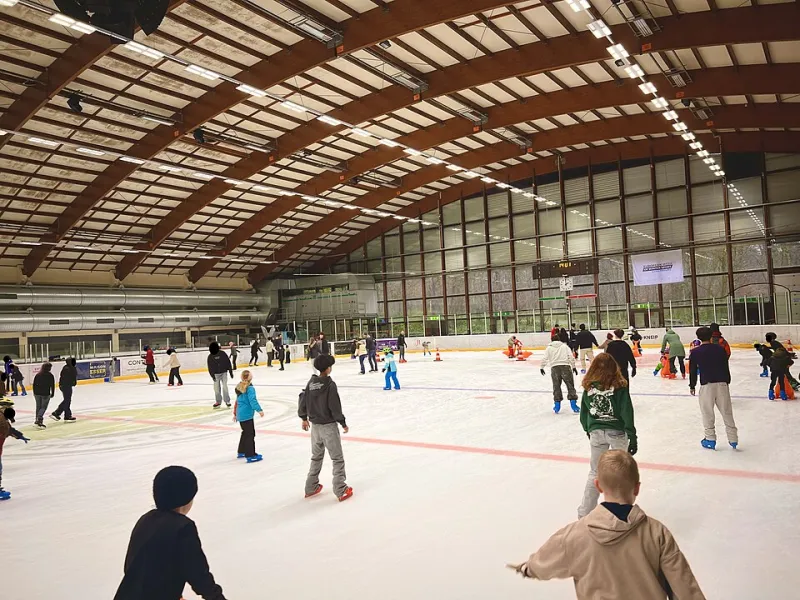
The single most important thing to understand about open skate is that the ice moves in one direction. Almost every public rink in the US runs counterclockwise during general sessions. That means skaters travel to the right when they enter and loop around the rink in that same direction. Go the wrong way and you're basically driving the wrong way on a highway.
Beyond direction, there's also an unofficial speed lane system. The outer edge near the boards tends to be where faster, more confident skaters cruise. The middle and inner portion of the ice is where beginners, kids, and people still finding their footing generally hang out. You don't have to stay glued to the center forever, but starting there while you get comfortable is genuinely the smart move — not just for you, but for the people flying past on the outside.
If you need to stop, don't just slam on the brakes in the middle of traffic. Drift toward the boards, slow down gradually, and rest there. The boards exist for exactly this reason.
Falling Is Fine — Just Do It Right
Here's something rink staff will tell you straight up: falling is not embarrassing. Everyone does it. What matters is how you handle it.
When you feel yourself going down, try to fall to the side rather than backward or forward. Avoid putting your hands flat on the ice to catch yourself — fingers on open ice during a busy session are a serious injury risk. Once you're down, get up quickly rather than sitting on the ice. You become an obstacle the moment you hit the surface, and other skaters are doing their best to avoid you.
If you see someone fall near you, give them space to recover. Circling around them is more helpful than stopping right next to them and creating a pile-up situation.
The Boards Are Not a Hallway
A lot of newcomers hug the boards the entire session, which is totally understandable — it feels safe. But if you're moving slowly along the boards and there are faster skaters trying to use that outer lane, you're creating a bottleneck. Try to gradually work your way toward the center as you get more comfortable, even if it feels scarier.
Also: the boards are not a place to have a long conversation. If you want to catch up with your friend, take a break off the ice or step to the side near the entrance gate. Stopping in the flow of traffic — even near the edge — disrupts everyone behind you.
Rental Skates, Personal Skates, and Gear Etiquette
If you're using rental skates, treat them like you'd treat anything you borrowed from a stranger — with basic respect. Drag them along the rubber mats rather than walking on the blades, and return them in the same condition you got them.
If you notice someone's blade guard left on the ice, kick it to the boards. Blade guards, water bottles, and dropped gloves are hazards, and picking them up (or at least moving them) is just part of the shared-ice social contract.
For those who eventually buy their own skates: figure skates and hockey skates coexist on public sessions all the time, but the toe picks on figure skates can be surprising to people who've only ever worn hockey skates. Just be aware that different blade styles mean different stopping and turning behaviors from the skaters around you.
Kids, Skate Aids, and Sharing Space
Most rinks rent those little penguin or seal-shaped skating aids for young kids, and they're genuinely great tools. But they also move unpredictably and slowly, which means if you're moving at any real speed, you need to give them a wide berth. Assume a kid with a skate aid might change direction without warning — because they will.
Parents skating with small children: try to keep your group moving in one consistent direction rather than zigzagging across the ice. It's easier for everyone to anticipate your path if you're predictable.
Music, Announcements, and Rink Staff
Most open skate sessions play music through the rink's sound system, and no, you generally can't request songs. The DJ booth or staff control the playlist, and it's usually designed to keep energy up for a mixed crowd. Asking once is fine if there's an obvious point of contact, but pestering staff about the music during a busy session is a quick way to become someone they remember for the wrong reasons.
When the rink staff make an announcement — whether it's for a Zamboni break, a special skating direction change, or clearing the ice — stop what you're doing and listen. Zamboni breaks happen roughly every hour at most facilities, and everyone exits the ice at the same time. Use that break to grab water, tighten your laces, or rest your ankles.
The Golden Rule of Shared Ice
If there's one principle that covers everything else, it's this: be predictable. Sudden stops, sharp direction changes, and erratic movement are what cause collisions. The more consistently you move in one direction at one speed, the easier it is for everyone around you to anticipate where you'll be.
Experienced skaters aren't annoyed by beginners — they were beginners once, and most of them genuinely enjoy seeing new people on the ice. What frustrates experienced skaters (and honestly, rink staff too) is unpredictability and obliviousness. If you're aware of your surroundings and making a genuine effort to flow with the session, you're already doing better than you think.
Open skate is one of the most accessible, low-pressure ways to enjoy ice sports. The social code isn't complicated once you know it — and now you do. See you out there.